
Wrongful death claim amount 2025: Maximize
When Tragedy Strikes: Understanding What Your Loss Truly Means
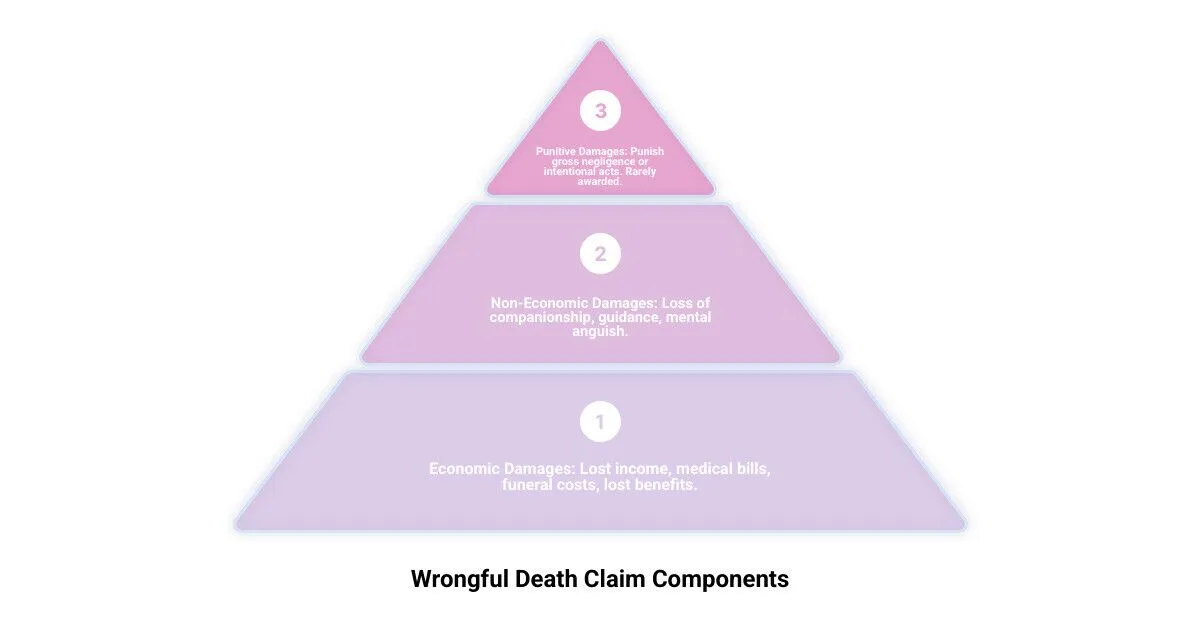
The wrongful death claim amount in Tennessee can range from $100,000 to several million dollars, depending on the specifics of the case. Key factors determining a settlement include:
- Economic damages: Lost income, medical bills, and funeral costs.
- Non-economic damages: Loss of companionship, emotional suffering, and loss of guidance.
- Punitive damages: Possible in cases of gross negligence or intentional harm.
- Case specifics: The deceased’s age and earning capacity, their relationship to survivors, and the strength of the evidence.
Losing a loved one is heartbreaking. When that loss stems from someone else’s negligence, the pain is compounded by injustice. You’re left grieving while facing mounting bills and an uncertain future.
While no dollar amount can replace the person you lost, Tennessee law provides a way for families to seek financial stability and hold the responsible party accountable. A wrongful death claim is not about putting a price on a life; it’s about securing your family’s future and obtaining a measure of justice.
This guide explains how wrongful death settlements are calculated in Tennessee, from the types of compensation available to the factors that influence your claim’s value. Our goal is to provide clarity as you consider your family’s next steps.
At Bill Easterly & Associates, we have spent decades helping Middle Tennessee families steer these difficult moments. We are part of the Nashville and Franklin communities we serve, and we are here to fight for what your family deserves.
Understanding Wrongful Death Claims in Tennessee
When a person dies due to another’s negligence or wrongful act, Tennessee law allows their family to file a wrongful death claim. This is a civil lawsuit seeking financial compensation to help you recover from the devastating losses you’ve suffered. These claims are governed by Tennessee Code Annotated § 20-5-106.
To prove a wrongful death case, your attorney must establish four key elements of negligence:
- Duty of Care: The responsible party had a legal obligation to act with reasonable care (e.g., a driver’s duty to drive safely).
- Breach of Duty: They failed to meet that obligation through a negligent act or omission (e.g., texting while driving).
- Causation: This failure directly caused your loved one’s death.
- Damages: Your family suffered measurable financial and emotional losses as a result.
Who Can File a Wrongful Death Claim in Tennessee?
Tennessee law establishes a clear hierarchy for who can file a claim. The surviving spouse typically has the primary right, followed by the deceased’s children (both minor and adult). If there is no spouse or children, the parents may file. If no immediate family exists, the personal representative of the deceased’s estate can bring the claim.
Any settlement or award is distributed according to Tennessee’s intestacy laws, which can be complex. An experienced attorney can ensure the process is handled correctly.
Wrongful Death vs. Survival Actions
These two actions address different losses but are often combined in Tennessee:
- A wrongful death claim compensates surviving family members for their own losses, such as lost financial support and companionship.
- A survival action compensates the deceased’s estate for the suffering they endured between the injury and death, including their medical bills and pain.
Essentially, Tennessee’s statute allows the family to recover for both their own losses and the losses the deceased would have been entitled to had they survived.
The Critical Statute of Limitations
In Tennessee, you have only one year from the date of death to file a wrongful death lawsuit. This is a strict legal deadline.
If you miss this deadline, you will almost certainly lose your right to seek compensation, regardless of how strong your case is. It is crucial to act quickly to preserve evidence, interview witnesses, and protect your family’s legal rights.
We know this is a difficult time, but taking prompt action is essential. For more information, you can explore our resources on Wrongful Death.
At Bill Easterly & Associates, we help families in Nashville, Franklin, and Murfreesboro steer these heartbreaking situations. We offer free consultations and work on a contingency fee basis, meaning you pay nothing unless we win your case.
The Building Blocks of Compensation: Types of Damages
Understanding the potential wrongful death claim amount means knowing how settlements are constructed. Compensation is divided into three categories: economic, non-economic, and punitive damages. Each addresses a different aspect of your family’s loss.
Economic Damages: The Tangible Financial Losses
Economic damages cover the concrete, calculable financial losses your family has incurred. These are the most straightforward costs to prove and typically include:
- Lost income and future earning capacity: This is often the largest component, representing the lifetime of financial support your loved one would have provided. It’s calculated based on their age, profession, and expected career path.
- Medical bills before death: Any expenses for emergency care, hospitalization, or treatment between the injury and death are recoverable.
- Funeral and burial expenses: These immediate costs are part of your economic damages. According to the National Funeral Directors Association, a funeral with burial can easily exceed $8,000.
- Loss of benefits: This includes the value of lost health insurance, retirement contributions, and pension plans.
- Value of lost household services: The economic value of tasks your loved one performed, such as childcare, home maintenance, or financial management, can be included.

Non-Economic Damages: The Human Cost of the Loss
Non-economic damages attempt to compensate for the profound, personal losses that have no price tag. These damages recognize the human impact of the tragedy and include:
- Loss of companionship, comfort, and consortium: For the loss of love, affection, and partnership, particularly for a surviving spouse.
- Mental anguish and emotional distress: For the grief, sorrow, and suffering experienced by the surviving family members.
- Loss of parental guidance and nurturing: When children lose a parent, this compensates for the loss of their guidance, education, and support.
- The deceased’s pain and suffering: If your loved one was conscious and suffered between the time of injury and death, the estate can recover damages for that experience.
Unlike some states, Tennessee does not generally cap non-economic damages in wrongful death cases, allowing juries to determine a fair value based on the family’s unique circumstances.
Punitive Damages: Punishing Gross Negligence
Punitive damages are not intended to compensate your family but to punish the wrongdoer and deter similar conduct in the future. They are awarded only in cases involving intentional misconduct, gross negligence, or a reckless disregard for human life, such as a drunk driving fatality. These damages require a higher burden of proof and are not available in every case, but they send a powerful message that egregious behavior will not be tolerated.
What Factors Influence the Wrongful Death Claim Amount?
There is no simple formula for calculating a wrongful death claim amount. The value of a settlement is unique to each family and depends on a combination of factors that paint a complete picture of the loss.
- The deceased’s age and health: A younger, healthier individual generally had a longer life expectancy and greater future earning potential, which often leads to a higher calculation for economic damages.
- Earning capacity and income: An attorney will analyze the deceased’s education, profession, and career trajectory to project their lifetime earnings. A person with high earning potential represents a greater financial loss to their family.
- Relationship to survivors: The nature of the relationship between the deceased and their family members is central to non-economic damages. The loss of a spouse or a parent to young children involves a profound loss of companionship and guidance, which is reflected in the claim’s value.
- Tennessee’s comparative fault rule: If the deceased is found to be partially at fault for the incident that caused their death, any award will be reduced by their percentage of fault. Critically, if they are found 50% or more at fault, the family is barred from recovering any damages at all.
- Insurance policy limits: The at-fault party’s insurance coverage often sets a practical limit on the amount that can be recovered. Collecting funds beyond these limits can be difficult, though not impossible.
- Strength of the evidence: A case with clear liability—supported by police reports, witness testimony, and expert analysis—is in a much stronger position during settlement negotiations.
- Jurisdiction: Juries in different communities may have different views on what constitutes fair compensation, especially for non-economic damages. An experienced local attorney understands these nuances and can tailor a legal strategy accordingly, whether the case is in Nashville, Franklin, or a more rural part of Middle Tennessee.

At Bill Easterly & Associates, we have decades of experience evaluating these factors for Middle Tennessee families. We know the local courts and how to build a case that reflects the true value of your loss.
The Path to Resolution: Navigating the Claims Process
Pursuing a wrongful death claim can feel daunting, but understanding the process can provide some clarity. While each case is unique, most follow a similar path toward resolution.
1. Initial Investigation and Evidence Gathering
The foundation of a strong claim is solid evidence. This first step involves collecting all relevant information, including police reports, medical records, witness statements, financial documents, and any photos or videos from the scene. In complex cases, accident reconstruction experts may be hired to determine exactly how the tragedy occurred.
2. Filing the Lawsuit
Once enough evidence is gathered, your attorney will file a formal lawsuit, or complaint, with the court. This document outlines the facts, explains how the defendant’s negligence caused the death, and specifies the damages you are seeking. This must be done within Tennessee’s one-year statute of limitations.
3. Findy Process
Findy is the formal process where both sides exchange information. This typically includes:
- Interrogatories: Written questions that the other party must answer under oath.
- Requests for Production: Formal requests for documents like insurance policies, maintenance logs, or safety records.
- Depositions: Sworn, out-of-court testimony from witnesses, experts, and the defendant. This is a critical step for locking in testimony and assessing the case’s strengths.
4. Settlement Negotiations and Mediation
Most wrongful death cases are resolved through settlement. Your attorney will send a demand letter to the insurance company, detailing liability and damages and demanding a specific wrongful death claim amount. This usually initiates a period of negotiation.
Mediation is often used to facilitate a resolution. A neutral third-party mediator helps both sides work toward a mutually acceptable agreement, and many cases settle at this stage.
5. Settlement vs. Trial
If a fair settlement cannot be reached, the case proceeds to trial. There are pros and cons to each path:
- Settlement offers certainty, privacy, and a faster resolution. It avoids the emotional toll and unpredictability of a jury trial.
- Trial can sometimes result in a larger award but is time-consuming, stressful, and carries the risk of an unfavorable verdict.
At Bill Easterly & Associates, we prepare every case as if it will go to trial. This thorough approach strengthens our negotiating position and ensures we are ready to fight for you in a Nashville or Franklin courtroom if necessary. Our goal is to achieve the best outcome for your family, whether through a strategic settlement or a powerful trial presentation.
For a closer look at how these cases move through the legal system, see our Guide to the Personal Injury Claims Process.

Frequently Asked Questions About the Wrongful Death Claim Amount
When you’re grieving, it’s natural to have questions about the legal process and what your family may be entitled to. Here are straightforward answers to common concerns about the wrongful death claim amount.
Is there an “average” wrongful death claim amount?
There is no reliable “average” settlement that applies to every case. Each family’s loss is unique, and the value of a claim depends entirely on its specific facts. A case involving a young parent with children will have a very different value than one involving a retiree.
Most settlements are confidential, so public data is limited and often skewed by unusual trial verdicts. Online calculators can provide a rough estimate, but they cannot account for critical factors like the strength of your evidence, the applicable insurance limits, or the profound non-economic losses your family has suffered.
The only way to understand what your claim may be worth is to consult with an experienced Tennessee wrongful death attorney who can evaluate the details of your situation. At Bill Easterly & Associates, we offer free consultations to help you understand your options.
How long do I have to file a wrongful death claim in Tennessee?
This is the most important deadline: you have one year from the date of your loved one’s death to file a lawsuit. This is Tennessee’s statute of limitations.
If you miss this deadline, you will almost certainly lose your right to seek compensation. While a year may seem like a long time, evidence can disappear and memories can fade quickly. Contacting an attorney as soon as possible is the best way to protect your family’s rights.
We encourage Middle Tennessee families to reach out to us early. We can handle the legal burdens while you focus on healing. We work on a contingency basis, so there are no upfront fees, and we only get paid if we win your case.
How are wrongful death settlements paid out?
Once a claim is resolved, compensation is typically paid in one of two ways:
- Lump-Sum Payment: The entire settlement amount is paid at once. After attorney’s fees and case expenses are deducted, the funds are distributed to the beneficiaries according to Tennessee’s succession laws (e.g., to the spouse and children).
- Structured Settlement: The money is paid out over time through an annuity. This is often used for larger settlements or when minor children are involved, as it provides long-term financial security and ensures funds are managed responsibly.
When minor children are beneficiaries, a court will oversee the settlement to ensure their interests are protected. Your attorney will guide you through the distribution process to ensure it is handled correctly and secures your family’s future.
If you’ve lost a loved one and need guidance, please reach out to learn how a wrongful death lawyer can help.
Securing Fair Compensation for Your Family’s Future
The death of a loved one leaves a void that can never be filled. When that loss is caused by someone else’s negligence, the pain is compounded by a deep sense of injustice. While no verdict can bring them back, a successful wrongful death claim provides critical financial stability and holds the responsible party accountable.
Calculating a fair wrongful death claim amount is a complex process. It requires a thorough analysis of economic and non-economic losses, guided by a deep understanding of Tennessee law and how courts in Nashville, Franklin, and across Middle Tennessee handle these sensitive cases.
You are also up against a strict one-year statute of limitations. You have only 12 months from the date of death to file a lawsuit, or your family’s right to compensation will likely be lost forever. Acting quickly is essential.
At Bill Easterly & Associates, we have spent decades standing with Middle Tennessee families during their darkest times. We are a Nashville-based firm that provides the results of a large firm with the personal attention and care of a local team that is part of your community.
We offer free consultations and charge no upfront fees. You will not pay us unless we win your case. This allows you to focus on your family while we handle the insurance companies and the fight for justice.
If you have lost someone due to another’s negligence, do not wait. Contact us today to protect your family’s rights and secure the financial support you need to move forward.

If you’ve lost a loved one, learn how a wrongful death lawyer can help.