
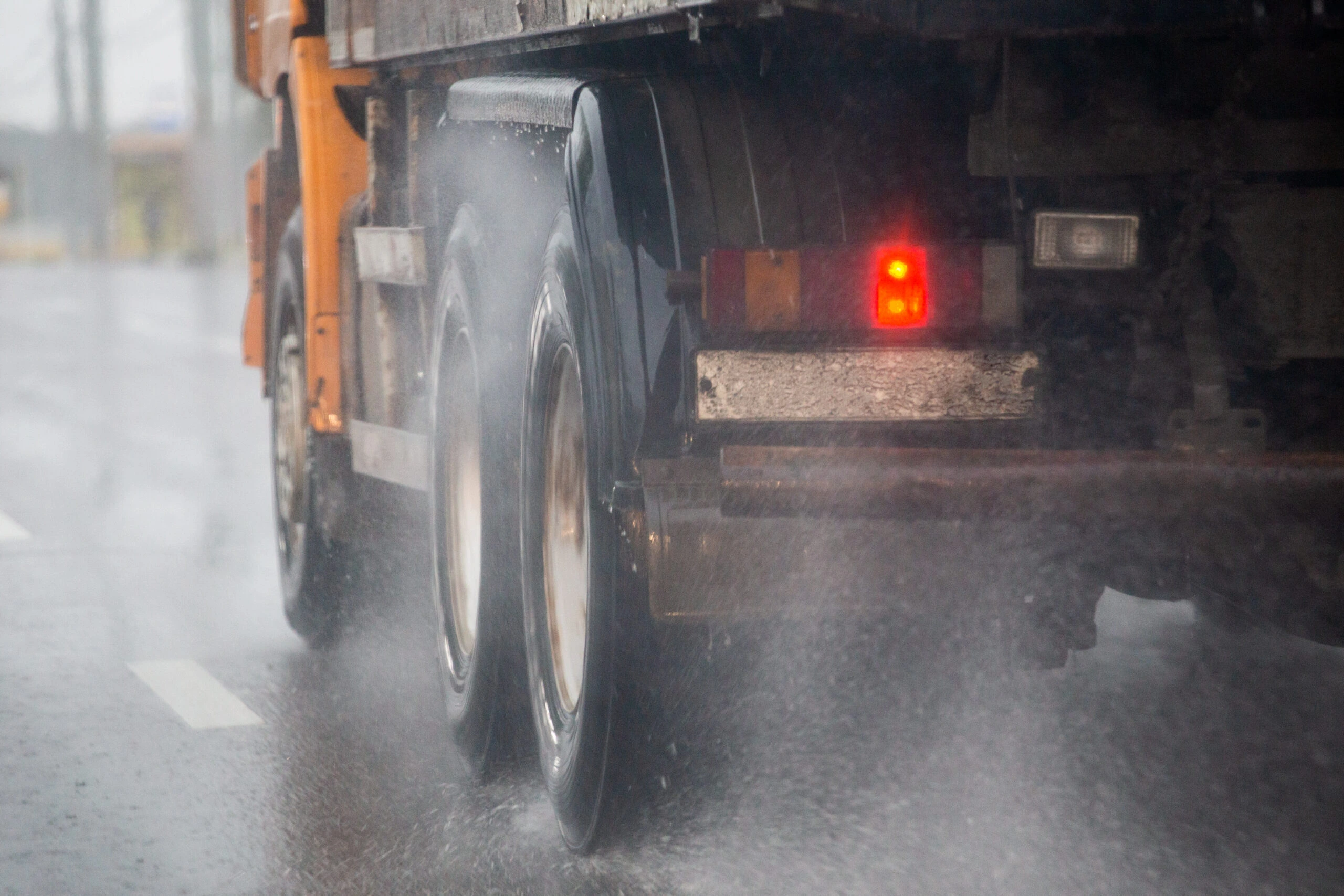
Driving alongside an 80,000-pound tractor-trailer is intimidating enough on a clear, sunny day. When the skies open up and rain begins to fall, that anxiety often turns into genuine fear. Visibility drops, roads become slick, and spray from massive tires can blind the drivers of smaller passenger vehicles.
If you have ever been passed by a speeding semi-truck during a storm, you have likely wondered: Are they allowed to do that? Do the rules of the road change when the weather turns bad?
The short answer is yes. Federal regulations and common sense dictate that professional truck drivers must adjust their speed for weather conditions while driving. Speeding in the rain is not just dangerous; it is often considered negligence.
At Bill Easterly & Associates, we have seen the devastating consequences of trucking accidents firsthand. Understanding the laws regarding truck speed in inclement weather is crucial for anyone sharing the road with these massive vehicles, especially if you have been involved in an accident.
Legal Requirements for Truck Drivers
While passenger cars should slow down in the rain, commercial truck drivers are held to a much higher standard due to the size and potential danger of their vehicles.
Federal Regulations on Speed
The Federal Motor Carrier Safety Administration (FMCSA) sets strict standards for commercial drivers across the United States. Specifically, regulations state that extreme caution must be exercised when hazardous conditions exist. This explicitly includes rain, mist, snow, ice, and other conditions that affect traction or visibility.
The law requires that speed must be reduced when these conditions are present. If conditions become sufficiently dangerous, the driver is required to stop driving entirely until the vehicle can be operated safely. This means that a truck slowing down isn’t just a suggestion – it is a federal mandate. Even if a truck is traveling at the posted speed limit, it may still be breaking the law if that speed is unsafe for the current weather.
The Duty of Reasonable Operation
Every driver on the road has a legal duty to operate their vehicle reasonably and safely. For a professional truck driver, “reasonable” behavior includes acknowledging that a heavy truck cannot stop as quickly or maneuver as easily on wet pavement as it can on dry asphalt.
When a driver ignores falling rain and continues at highway speeds, they are breaching that duty of care. If an accident occurs, that failure to adjust speed can be the primary evidence used to prove fault.
CDL Manual Guidelines
Commercial Driver’s License (CDL) manuals are the textbooks for professional drivers. These manuals act as the baseline for what a prudent driver should know. Most CDL manuals specifically address wet roads, advising drivers to reduce their speed by at least one-third when the road is wet. For example, if the posted speed limit is 55 mph, a responsible truck driver should be traveling no faster than 35 to 40 mph during rain.
Industry Standards and Best Practices
Beyond the letter of the law, the trucking industry has established best practices designed to keep roads safe. Professional trucking companies are expected to train their fleets on these standards.
Reducing Speed to Prevent Hydroplaning
One of the greatest risks of speeding in the rain is hydroplaning. This occurs when a layer of water builds up between the wheels of the vehicle and the road surface, leading to a loss of traction that prevents the vehicle from responding to control inputs.
Because trucks have large tires and heavy loads, drivers might mistakenly believe they are immune to hydroplaning. However, once a truck loses contact with the road, the momentum of the heavy cargo takes over. Industry standards emphasize that the only way to effectively prevent this is to reduce speed significantly.
Increased Braking Distances
Physics dictates that a heavy truck takes much longer to stop than a sedan. On a wet road, stopping distances increase dramatically. Industry training teaches drivers that they must account for this by slowing down well before they think they need to. If a driver maintains a high speed in the rain, they are voluntarily removing their ability to stop in an emergency.
Establishing Negligence in Rain Accidents
When a collision occurs in the rain, insurance companies often try to blame the weather, calling it an “act of God” or an “unavoidable accident.” However, skilled personal injury attorneys know that this is rarely the full story.
Exceeding Speed Limits vs. Driving Too Fast for Conditions
There is a major legal distinction between exceeding the posted speed limit and driving too fast for conditions. A police officer may not ticket a truck driver for speeding if they were going 60 in a 65 mph zone. However, if it were pouring rain, 60 mph could be considered negligent.
In a lawsuit, we look at whether the driver exercised “extreme caution” as required by federal law. If data from the truck’s black box (Electronic Control Module) shows the driver did not reduce speed despite heavy wiper usage or weather reports indicating a storm, we can argue that the driver was negligent.
Liability of the Trucking Company
Liability often extends beyond the driver. Trucking companies are responsible for ensuring their drivers are properly trained to handle weather conditions while driving. If a company pressures a driver to meet a strict delivery deadline despite a severe storm, the company may be held directly liable for prioritizing profits over safety.
Essential Safety Measures for Truckers
To avoid accidents, professional drivers are taught to take specific precautions when the rain starts to fall. Failure to take these steps can be seen as a failure to drive safely.
Increase Following Distance
On dry roads, trucks need a significant gap to stop safely. In the rain, that gap must be widened. Following too closely (tailgating) in the rain is a recipe for a rear-end collision. A prudent driver will double their following distance to account for slick surfaces.
Ensure Visibility
Using headlights is not just about seeing the road; it is about being seen by others. Federal law and state laws generally require headlights to be on when visibility is low or when windshield wipers are in use.
Eliminating Distractions
Rain demands 100% of a driver’s attention. Activities that might be dangerous in dry weather — eating, adjusting the radio, or checking a dispatch device — become deadly in the rain. A professional driver knows that when the weather turns, distractions must be eliminated.
How Bill Easterly & Associates Can Help
At Bill Easterly & Associates, we understand how traumatic and disheartening a collision with a large truck can be. You are seriously injured and worried about how you’ll pay the bills. All of this is taking place at the same time the trucking company and their insurance adjusters are hounding you to settle and sign over your legal rights.
If a truck driver failed to respect the weather and caused your injury, they should be held accountable. Contact the experienced legal team at Bill Easterly & Associates to help you get the money you deserve after a serious truck accident. We offer a free case evaluation to review your accident and help you determine your best legal course of action. Schedule your consultation today.