
Who Is Liable for Accidents Caused by Potholes and Road Debris?
Driving requires constant vigilance. You watch the cars in front of you, check your mirrors, and monitor your speed. But sometimes, the danger isn’t another driver — it’s the road itself. Whether it’s a crater-sized pothole that ruins your suspension or a piece of furniture that fell off a truck, hitting stuff on the road is a terrifying and dangerous experience.
According to a study by the AAA Foundation for Traffic Safety, road debris caused over 200,000 crashes between 2011 and 2014, resulting in approximately 39,000 injuries and 500 deaths. These aren’t just minor inconveniences; they are serious hazards that can alter lives in an instant.
When a crash happens because of poor road conditions or loose cargo, victims are often left wondering who to blame. Is it bad luck? Is it your own fault? Or is there a negligent party who should pay for the damages? Determining liability for car accidents caused by debris or road defects is complex, but it is possible with help from the attorneys at Bill Easterly & Associates.
Identifying Potential Liable Parties for Road Hazards
In a typical car accident, liability usually falls on one of the drivers involved. However, when the “at-fault” party is a pothole or a stray piece of lumber, the path to compensation becomes less clear. Generally, liability falls into three main categories: government entities, negligent drivers, or commercial trucking companies.
1. Government Agencies (City, County, or State)
Local and state governments are responsible for keeping roads safe for travel. This includes filling potholes, clearing debris, and ensuring that road designs are safe. If you hit a massive pothole that damages your vehicle or causes you to lose control, the city, county, or state Department of Transportation (DOT) might be liable.
However, the government isn’t automatically responsible for every bump in the road. To win a claim against a government entity, you usually must prove that they knew (or should have known) about the hazard and failed to fix it in a reasonable amount of time.
2. Negligent Drivers and Unsecured Loads
We have all seen it: a pickup truck driving down the highway with a mattress tied down by a single, fraying piece of twine. When that mattress inevitably flies off and causes an accident, that driver is liable.
All drivers have a legal duty to secure their cargo. If hitting stuff on the road caused your accident, and that “stuff” can be traced back to a specific vehicle, that driver is responsible for the damages. This applies to furniture, appliances, construction materials, and even tools left on the bumper.
3. Commercial Trucking Companies
Commercial trucks are a common source of dangerous road debris. This can include:
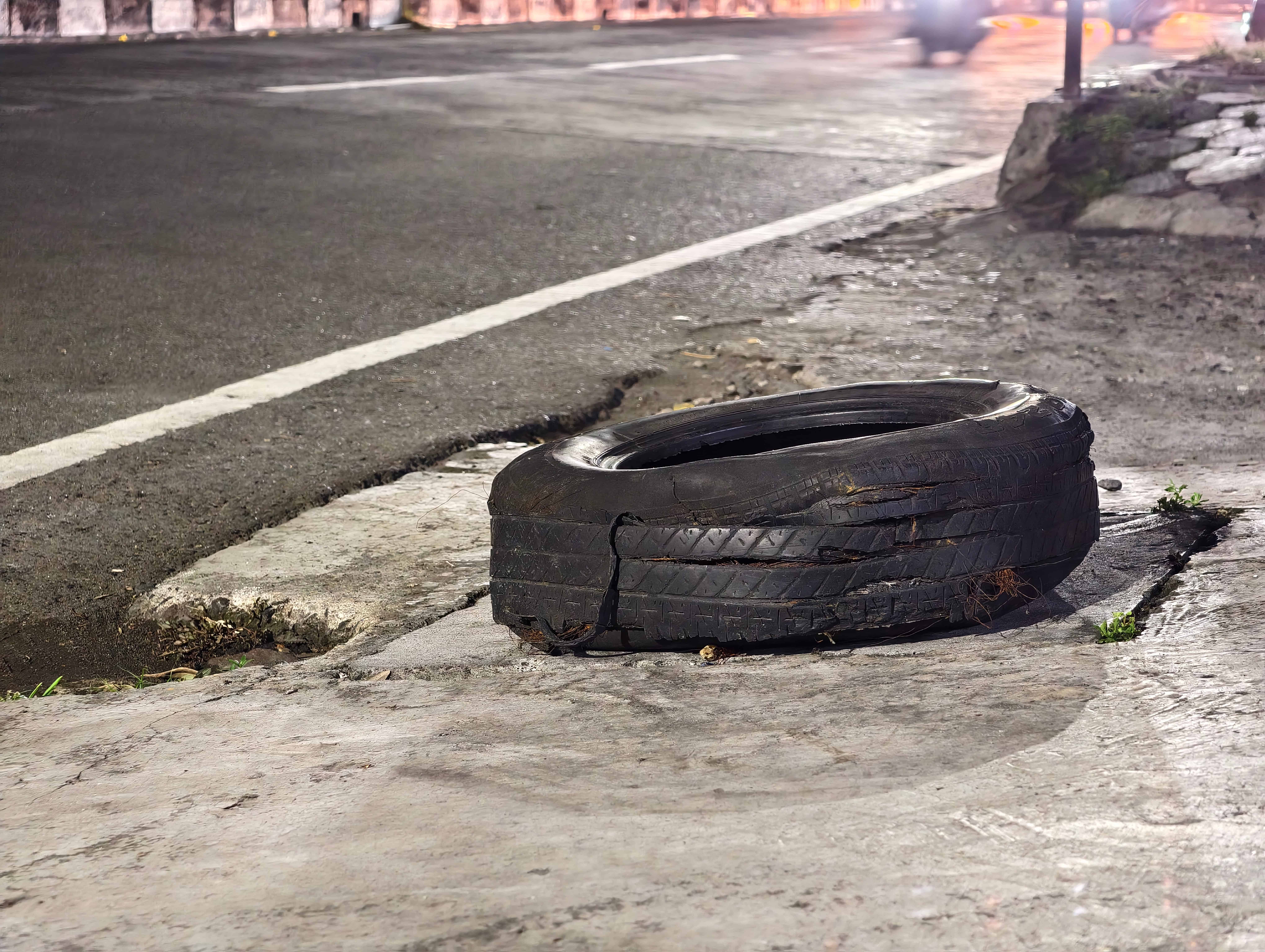
- Blowouts: Large strips of tire tread (often called “road gators”) can cause significant damage to smaller vehicles. If a blowout was caused by poor maintenance or using retreaded tires improperly, the trucking company may be liable.
- Lost Cargo: Commercial trucks must adhere to strict federal regulations regarding load securement. If cargo shifts or falls because it wasn’t properly tied down, the trucking company and the loading crew can be held responsible.
4. Construction Companies
Road work zones are hotspots for debris. If a construction company leaves cones, barriers, tools, or gravel in the travel lanes, and you crash as a result, the construction firm may be liable for negligence.
Proving Negligence: Knowledge is Key
Identifying who caused the hazard is step one. Step two is proving negligence. In the context of road hazards, negligence often hinges on “notice.”
For car accidents caused by debris dropped by a specific driver, negligence is straightforward: they failed to secure their load. However, for potholes or debris left by unknown parties, you must often prove that the responsible party (usually the government) had “constructive notice.”
Constructive notice means the condition existed for long enough that the city should have discovered and repaired it during routine maintenance.
For example, if a pothole appeared yesterday and you hit it today, the city might argue they didn’t have time to fix it. But if that pothole has been there for six months and residents have filed multiple complaints, the city’s failure to act constitutes negligence.
Rules for Claims Against the Government
If your accident was caused by a pothole or road defect, you are likely dealing with the government. Suing a city or state is not the same as suing a private citizen. Governments are protected by “sovereign immunity,” which limits when and how they can be sued.
To bring a claim against the government (like the Tennessee Department of Transportation or a local municipality), you must follow strict procedural rules:
- Notice of Claim: You generally cannot just file a lawsuit. You must first file a “Notice of Claim” with the appropriate government agency.
- Short Deadlines: The statute of limitations for claims against the government is often much shorter than for standard personal injury cases. In some jurisdictions, you may have as little as 90 days or six months to file notice.
- Damage Caps: Many states limit the amount of money you can recover from a government entity, regardless of how severe your injuries are.
Because of these complexities, it is vital to consult with an attorney immediately after an accident involving road defects. Missing a deadline by even one day can bar you from recovering compensation.
Steps to Take After Hitting Road Debris
If you are involved in an accident caused by a road hazard, your actions immediately following the crash are crucial for your claim.
- Call the Police: Always get an official police report. This documents the time, location, and cause of the accident.
- Document the Scene: If it is safe to do so, take pictures of the hazard. Photograph the pothole, the piece of debris, or the tire tread. Show its size and location relative to the road.
- Gather Witness Info: Did anyone else see the debris fall off a truck? Did other drivers hit the same pothole? Witnesses can be vital in proving that the hazard existed and was dangerous.
- Do Not Admit Fault: Do not tell the police or insurance adjusters that you “should have swerved” or “wasn’t looking.” State the facts: there was an obstruction in the road that caused the crash.
- Seek Medical Attention: Even if you feel okay, get checked out. Adrenaline can mask injuries.
- Report the Hazard: After the accident, report the debris or pothole to the local DOT or public works department. This creates a record of the hazard.
How Bill Easterly & Associates Can Help
Hitting stuff on the road is unexpected, unfair, and dangerous. Whether you were run off the road by a swerving truck or wrecked your car on a neglected city street, you shouldn’t have to pay for someone else’s negligence.
At Bill Easterly & Associates, we understand the specific challenges of investigating car accidents caused by debris and road defects. We know how to track down negligent trucking companies, and we know how to navigate the bureaucratic red tape of government claims.
If you or a loved one has been injured in Tennessee due to a road hazard, don’t try to fight the insurance companies or the government alone. Contact Bill Easterly & Associates today for a free consultation. Let us handle the legal heavy lifting so you can focus on your recovery.