
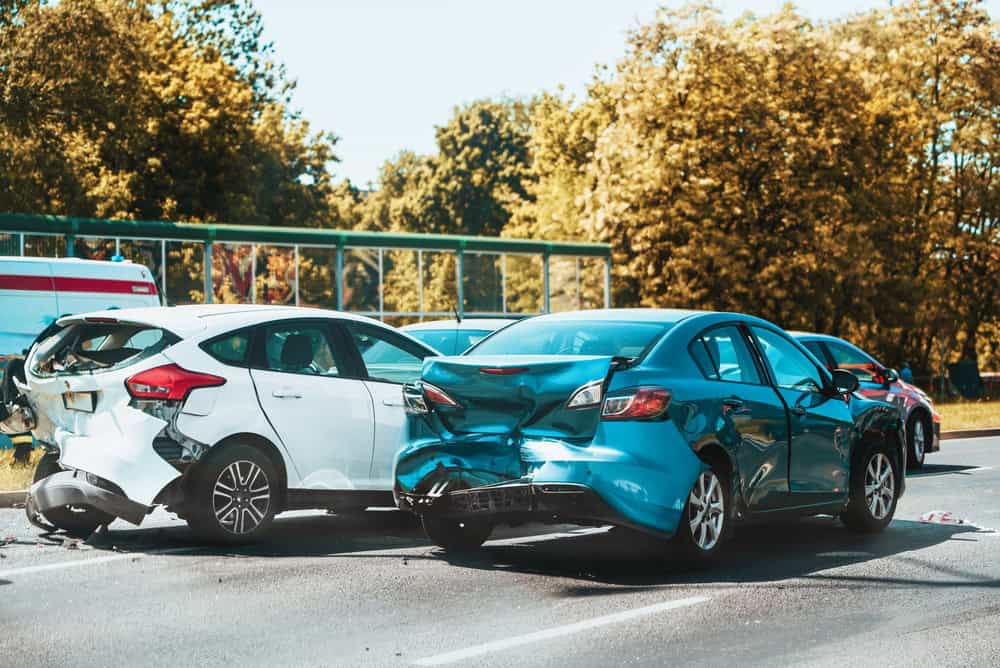
Who Is Liable for Traffic Backups and Secondary Crashes?
Traffic backups and secondary accidents are incredibly frustrating for everyone on the road. You might be sitting in a sudden jam caused by an initial wreck ahead, only to be rear-ended by a distracted driver. Suddenly, a bad situation becomes much worse. Determining who is legally responsible for these subsequent crashes can quickly become a complicated legal puzzle.
Whether you are dealing with minor fender benders in crowded parking lots or severe chain reaction crashes on the highway, understanding liability is crucial to protecting your rights. The driver who caused the initial hazard is often to blame, but multiple parties can share the fault depending on the specific circumstances of the collision.
At Bill Easterly & Associates, we help Tennessee drivers navigate these complex legal situations. We understand how overwhelming it can be to deal with vehicle damage, medical bills, and insurance companies after a crash. This guide breaks down the basics of liability in backing-up accidents and secondary crashes to help you understand your legal options.
Who is liable in a chain reaction car accident?
Liability in a chain reaction crash depends on who caused the initial hazard, how other drivers reacted, and whether multiple parties contributed to the collision.
Understanding Primary vs. Secondary Accidents
To determine liability, it is helpful to understand the difference between the initial event and the subsequent collisions.
Defining Primary Accidents
A primary accident is the initial incident that creates a hazard on the roadway. This could be a driver suddenly slamming on their brakes, a vehicle backing out into oncoming traffic, or a collision between two cars that blocks a lane of travel. This primary event sets off a chain of events that affects other drivers.
Defining Secondary Accidents
Secondary accidents occur as a direct result of the initial incident. When the primary crash causes sudden traffic backups, approaching drivers may not have enough time to stop safely, leading to additional collisions. These secondary crashes can involve multiple vehicles and are often more severe than the initial fender bender.
Liability in Backing-Up Accidents
A common cause of secondary crashes and parking lot jams is vehicles backing up improperly. In most situations, the rules regarding who is at fault are clear, though exceptions do exist.
Primary Responsibility: The Reversing Driver
Generally, the driver reversing their vehicle bears the primary responsibility for any resulting collision. Drivers moving backward have a strict duty to ensure their path is completely clear before initiating the maneuver.
Examples of negligence include backing out of a driveway without looking or pulling out of a parking space directly into the path of an oncoming vehicle.
Exceptions to the Rule
While the reversing driver is usually at fault, there are exceptions. If an oncoming driver acts recklessly, they might be held liable. For instance, if an approaching driver intentionally speeds up to block a reversing vehicle, they share the blame.
Additionally, if the backing driver had already safely initiated their maneuver and was visible, an approaching driver who fails to yield might be at fault.
Shared Fault Scenarios
Sometimes, liability is shared between multiple parties. A classic example is when two drivers back out of opposite parking spaces simultaneously and collide. In these shared fault scenarios, insurance companies will often assign a percentage of blame to each driver based on the available evidence.
Liability in Secondary Accidents and Traffic Backups
When traffic backups lead to chain reaction crashes, figuring out who pays for the damages requires a careful investigation of the initiating driver and other potential third parties.
The Initiating Driver’s Role
Responsibility usually falls on the driver who initiated the hazard. If a driver creates an obstruction by stopping illegally, parking in a moving lane, or driving recklessly, they can be held liable for the resulting secondary accidents.
Furthermore, drivers approaching the hazard who fail to react reasonably to the changing traffic conditions — such as texting instead of braking — can also be held responsible for the damage they cause.
Third-Party Liability
In some cases, the fault does not lie with a driver at all. Poor road design or lack of proper maintenance can contribute to chain reaction crashes. Faulty traffic signals that display conflicting lights or poorly marked construction zones can also place liability on government agencies or private contractors.
Key Factors in Determining Fault
Insurance adjusters and legal professionals look at several key elements when determining who caused a crash.
Right-of-Way Rules
Right-of-way rules are fundamental in establishing fault. A vehicle actively in motion on a roadway almost always has the right-of-way over a vehicle attempting to exit a parking space or driveway. Failing to yield the right of way is a clear sign of negligence.
Crucial Evidence
Proving liability requires strong evidence. Surveillance cameras from nearby businesses and dashcam footage are incredibly valuable, as they show exactly who was moving first and how the drivers behaved.
Witness reports provide an objective perspective on the sequence of events. In severe chain reaction crashes, accident reconstruction professionals may be brought in to analyze skid marks and vehicle damage.
Duty of Care
All drivers owe a duty of care to others on the road. This means acting as a reasonable person would under similar circumstances. Checking blind spots, utilizing rearview cameras, and maintaining a safe following distance are all required to meet this standard.
What to Do if You’re Involved in a Chain Reaction Crash in Tennessee
If you find yourself caught in a multi-vehicle pileup, taking the right steps can protect your health and your legal claim.
Prioritize Safety
First, check yourself and your passengers for injuries. If you are able to do so safely, move your vehicle out of the flow of traffic to prevent further collisions. Call 911 immediately to report the accident and request medical assistance.
Gather Information
If it is safe to do so, exchange contact and insurance information with all other drivers involved. Take clear photos of the accident scene, including vehicle damage, license plates, skid marks, and any relevant road signs or traffic signals.
Seek Legal Counsel
Multi-vehicle accidents involve multiple insurance companies, all trying to minimize their payouts. Speaking with an experienced attorney is the best way to ensure your rights are protected during the claims process.
Get Help With Your Tennessee Car Accident Claim
Navigating the complexities of chain reaction crashes and sudden traffic backups is difficult. Determining exactly whose negligence caused the sequence of events requires a thorough investigation, an understanding of state traffic laws, and the ability to negotiate with aggressive insurance adjusters. You should not have to manage this burden alone while recovering from your injuries.
If you or a loved one has been injured in a multi-vehicle accident, contact Bill Easterly & Associates today. Our experienced legal team is dedicated to helping car accident victims in Tennessee secure the compensation they need to move forward. Contact us today for a free consultation to discuss the details of your case.