
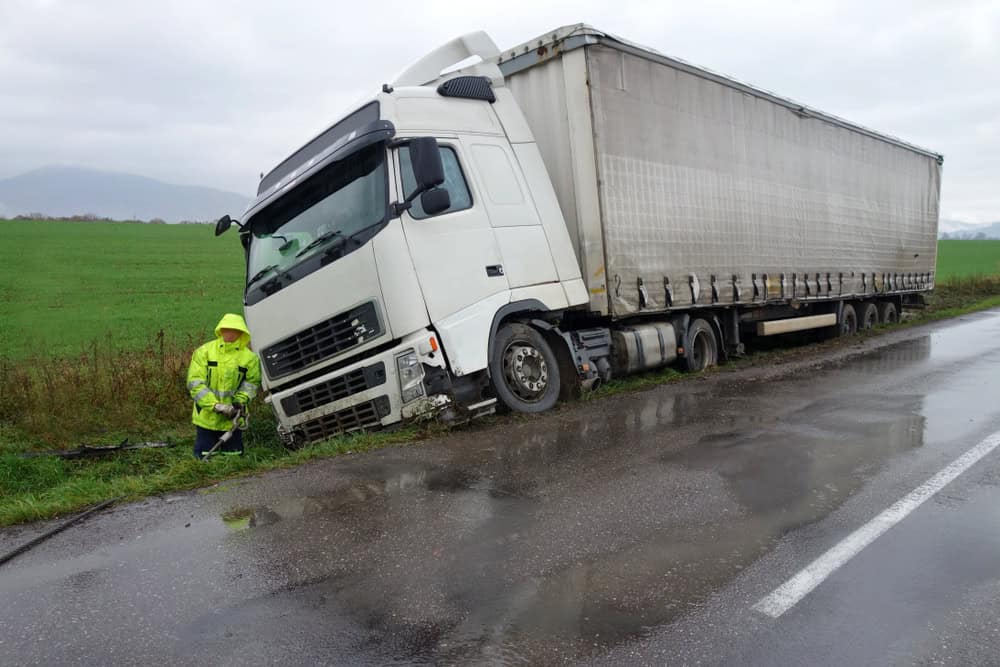
Truck Driving in the Rain: Driver Safety Responsibilities
Heavy rainfall drastically changes the dynamics of highway travel. When a fully loaded commercial truck weighing up to 80,000 pounds encounters wet pavement, the stakes are incredibly high. Poor visibility and slick roads combine to create a hazardous environment for everyone on the highway.
Understanding a truck driver’s responsibilities is essential to preventing devastating collisions. Commercial drivers hold a commercial driver’s license (CDL), meaning they are held to a higher standard of care than passenger vehicle drivers. The law expects them to adjust their driving behavior immediately when the weather turns bad.
This post explains the specific rules governing truck driving in the rain, including Federal Motor Carrier Safety Administration (FMCSA) regulations and industry safety standards. We will look closely at speed reduction mandates, critical safety protocols, and the legal implications when drivers fail to adjust to wet weather conditions.
Do truck drivers have to slow down in the rain?
Yes. Under federal regulations, commercial truck drivers are required to reduce speed and use extreme caution when weather conditions affect visibility or traction.
Legal Framework: FMCSA Regulations and “Extreme Caution”
The federal government regulates commercial trucking to ensure public safety. When bad weather strikes, these rules become highly specific regarding how a commercial driver must operate their vehicle.
49 CFR § 392.14: The Mandate to Reduce Speed
Under FMCSA regulation 49 CFR § 392.14, commercial truck drivers have a legal duty to exercise “extreme caution” during adverse weather conditions. This regulation explicitly requires drivers to reduce their speed when rain, mist, snow, or ice adversely affects traction or visibility. It is a strict mandate, not a mere suggestion.
Defining “Extreme Caution” in Adverse Weather
“Extreme caution” means a driver must take proactive, defensive measures beyond standard safe driving practices. In heavy rain, this involves a combination of slowing down, increasing space between vehicles, and hyper-vigilance. If a driver treats a rainstorm like a sunny day, they are violating this federal standard.
Core Responsibilities of Truck Drivers in the Rain
Commercial drivers must execute several critical adjustments as soon as rain begins to fall. These core truck driver’s responsibilities are taught in CDL training and enforced by safety directors nationwide.
1. Duty to Reduce Speed
Speed is the most dangerous factor in wet-weather trucking. Industry standards, such as those found in CDL training manuals, advise drivers to reduce their speed by at least one-third on wet roads. For example, if the posted speed limit is 55 mph, a safe speed would be around 35 to 40 mph.
Additionally, law enforcement and courts recognize the concept of driving “too fast for conditions.” This means a driver can be ticketed or held liable for an accident even if they are traveling at or below the posted speed limit. The speed limit applies to ideal weather; rain requires a slower pace.
2. Increased Following Distance
A commercial truck requires a massive amount of distance to stop completely. On wet pavement, braking distances increase drastically. Drivers must double their standard following distance to avoid rear-end collisions. Giving passenger cars plenty of space ensures the truck has enough room to brake safely if traffic suddenly halts.
3. Proper Lighting Usage
Visibility is heavily compromised during a storm. Drivers must turn on their low-beam headlights to ensure they can see the road and others can see them. Low beams are necessary because high beams reflect off the rain and create a blinding glare.
If the truck is traveling significantly below the normal speed of traffic or is parked on the shoulder, the driver must activate their hazard lights.
4. Knowing When to Stop
Sometimes, reducing speed is not enough. If conditions become sufficiently dangerous — such as near-zero visibility from torrential downpours or an inability to maintain lane control due to high winds and water — drivers are required to discontinue operations. They must pull over to a safe location, like a rest stop or weigh station, and wait until conditions improve.
Advanced Safety Considerations for Rainy Conditions
Beyond speed and spacing, commercial drivers must manage the mechanical and physical forces acting on their rig during a storm.
Avoiding Cruise Control and Engine Retarders
Using cruise control on wet roads is highly dangerous because it limits the driver’s ability to react instantly to traction loss. Furthermore, drivers are advised to disable engine retarders, commonly known as “Jake brakes.” Using engine brakes on slippery pavement can cause the drive tires to lock up, leading to immediate hydroplaning and potential jackknifing.
Managing Hydroplaning
Hydroplaning occurs when a layer of water builds up between the tires and the road surface, causing the truck to lose contact with the pavement. If a truck begins to hydroplane, the driver’s proper response is to ease off the accelerator and keep the steering wheel perfectly straight. Making sudden braking or steering maneuvers will easily cause a total loss of control.
Pre-Trip Inspections and Tire Maintenance
A driver’s responsibility begins before they even turn the ignition. Thorough pre-trip inspections are vital. Drivers must ensure their tires have adequate tread depth to channel water away and that their windshield wipers and brakes are functioning flawlessly.
Legal Implications of Negligence
When truck drivers fail to follow these safety mandates, the legal consequences are severe.
Liability Even at or Below Speed Limit
As mentioned earlier, traveling the speed limit in heavy rain is often unsafe. If a crash occurs, investigators will look at the weather data and the truck’s electronic logging device (ELD) or dashcam. If the driver was moving too fast for the wet conditions, they can be held legally negligent, regardless of the posted highway signs.
Proving Negligence in Rain-Related Truck Accidents
Proving negligence involves demonstrating that the driver failed to meet their duty of care. Attorneys look for evidence that the driver ignored FMCSA regulations, skipped required speed reductions, or followed passenger cars too closely. Establishing this failure is critical to securing compensation for victims injured in a rain-related crash.
Securing Justice After a Wet-Weather Truck Crash
Commercial truck drivers carry a heavy burden to keep our highways safe. Their legal duty to exercise extreme caution, reduce speed, and manage their equipment properly is non-negotiable. When they ignore these truck drivers’ responsibilities, innocent motorists suffer the consequences. Safety must always take priority over delivery schedules, especially when navigating truck driving in the rain.
If you or a loved one has been injured in a commercial vehicle accident in Tennessee, you need experienced legal representation. The team at Bill Easterly & Associates understands the complex federal regulations governing the trucking industry. We know how to investigate weather-related crashes and hold negligent drivers and trucking companies accountable.
Contact Bill Easterly & Associates today for a free consultation to protect your rights and pursue the compensation you deserve.